Monday, 5 August 2019

Required Elements of Project Definition document 1

Required elements

Here are the must-have informational elements that should be included in your Project Definition document:
  • Purpose—This section should answer the “Why?” question and clearly communicate the expected business value. It should reference the organizational objective being supported, the business problem being solved, and its relative priority level. 
  • Goals and Objectives—This section is derived from the Purpose and communicates the targeted outcomes for the project. It should answer the “What are you going to accomplish?” question. 
  • Success Criteria—Closely related to Goals and Objectives, this section should list the measurable, verifiable results that determine the success level of this project. This section is often referred to as Critical Success Factors.
  • Project Context—Documents how this project relates to other projects within the product program and within the organization as a whole. This section should also describe how the project fits within the organization and business process flow.
  • Project Dependencies—Closely related to Project Context, this section clearly documents any dependencies that could affect the results or success factors of this project.
  • Scope Specifications—Clearly designates the organizational, process, systems, and functional specification boundaries for the project. This section should be a high-level breakdown of the Goals and Objectives.
  • Out-of-Scope Specifications—Clearly indicates the high-level work items that are related (or associated) to this initiative but that are not part of this project to better communicate what is considered to be “in scope.”
  • Assumptions—Clearly communicates the underlying basis or things to be considered true in regard to any other aspect of this document. In most cases, the Scope, Out-of-Scope, Assumptions, and Constraints sections combine to clearly define what work will be performed by this project. 
  • Constraints—Lists any business event, schedule, budgetary, resource, or technical factor that will limit the options available to the project.
  • Risks—Lists any uncertain event or condition (risk) that, if it occurs, could have a negative effect on one or more project success criterion (schedule, budget, quality, and so on). For each risk, it is good to list the related causes, the perceived negative effects, the likelihood it will occur, and the planned response strategy and action items.
  • Stakeholders—Lists all the individuals, business units, and organizations involved in the project, the role(s) each is expected to play, and an indication of how they relate to one another. A Project Organization chart and a Stakeholder-Role Description Table is highly recommended here.
  • Recommended Project Approach—Highlights the recommended approach to getting the work of the project done and why it is selected over any other options as a way to better describe the intent of the initiative. This section should note any key strategies, methodologies, and technologies to be used.

Apart from the above mentioned elements, there are informational elements that might not always apply, but if appropriate, are recommended additions to the Project Definition document. These are:

  • Alternative Project Approaches—This section lists the approach details for any alternatives that were considered. 
  • Organizational Change Issues—Because most projects result in a change to the status quo, and the most common oversight in projects is not adequately realizing, planning, and preparing for the “change” impact to current customers, business processes, and personnel, it is highly recommended that this area be a focus from the start of the project.
  • Policies and Standards—Given the priority that standardization, compliance, process improvement, security, and quality have in most organizations, it is highly recommended that any policy, regulation, or standard that will be applied to the project or the results of the project be identified from the start of the project.
  • Preliminary Cost, Schedule, and Resource Estimates—Generally, there is some preliminary “ballpark” expectation for the cost, timing, and resource needs of this project. In many cases, these will be noted as either project objectives or as project constraints. The most valuable information here is not necessarily the date or the dollar amount, but an explanation for what is driving the figures presented.
  • References to Supporting Documents—For any situation, where the results of a preliminary or related project served to define the need or details for this project, always include a reference to those supporting documents. Common examples would be a Business Case, Cost-Benefit Analysis, Assessment Results, Requirements Document, and Business Process Engineering Studies.
  • Visual Scope Summary—For most projects, a visual summary of the project scope can be an invaluable tool for communicating the objectives, boundaries, and “change” elements of the project. It can help validate the definition of the project, identify potential risks, and greatly improve the common understanding of the project stakeholders. Especially for any project that is introducing significant change, the effort to create this visual summary is one of the best investments you’ll make. The creation of a visual scope summary definitely falls into the “art” part of project management—there is not a single way to do this. The specific tool or medium used can vary depending on skill set and tools available. The specific approach depends on the nature of the project. For product and construction projects, a prototype or visual drawing of the target can be used. For projects impacting business processes, a variant of a flow diagram (process, data, system) showing current state and proposed future state can be very effective. There is no right answer—you just need to be effective.
Project Definition Checklist

A project definition checklist can help you to determine whether your project is defined properly and whether you are ready to proceed to the next iteration of detailed planning. If you find that your project is not properly defined, you have the following options available:

• Resolve any gaps with appropriate stakeholders before moving on to the next phase.
• If the project has already been defined, work to resolve these gaps during the detail planning phase.
• If gaps cannot be resolved, then handle as project risks or issues (whichever is appropriate for the specific gap).

General

• Is it clear why this is project is being undertaken?
• Is there a clear picture of the desired results of this project?
• Is there a clear picture of how this project fits within the organizational landscape?
• Is there a gap between available and needed funds?
• Have the success factors been identified? Are they complete? Are they SMART?
• Have any future state performance targets been defined as success factors? Are they SMART?
• Is the gap between the current state and the desired future state clearly documented and understood?
• Has the expected “change” impact on existing business processes, customers, systems, and staff been clearly documented?
• Do you understand who is funding the project initiative?

We'll cover some more required elements in our next post.


Friday, 2 August 2019

How to properly define a project?

This is most important stage because it builds the foundation for all other project management activities and sets the stage for our eventual project success (or failure).


The irony of this is that depending on your organization and industry, you (the project manager) might be the primary agent in getting this done, or you might not be involved at all until after project definition is complete.

In either case, you need to know how to properly define a project and how to evaluate if a project definition performed by others is complete before starting any detailed project planning efforts.

With all this in mind, in this post we will review the critical importance this step plays, the key questions that must be answered and agreed upon, the “must-have” elements of your Project Definition document, and the success criteria for the project definition process.

Setting the Stage for Success depends on getting the key project participants to agree on the answers to these seven basic project definition questions:
  • Why are we doing this? (Purpose)
  • What organizational level goal(s) does this project support? (Goals and Objectives)
  • How does this project fit with the other projects that are going on? (Scope, Project Context, Project Dependencies)
  • What is the expected benefit from this project? (Expected Benefits, Business Case, Value, Success Criteria)
  • What are we going to do? (Scope)
  • Who is affected by this and who must be involved? (Stakeholders)
  • How will we know when we are done and whether the project was successful? (Success Criteria)

Gaining consensus on these questions is paramount to managing the organizational-level factors that get projects in trouble (such as alignment with organization and management support) and to controlling key project-level factors that impact project success: stakeholder expectations and scope
management.

Defining a project is part of the project planning process, however, it is important to make the distinction for several reasons:
  • Before you develop a detailed and complete project plan, you need to know the parameters and boundaries for the project.
  • You need to know the key stakeholders are in agreement with the project mission (project purpose, goals, objectives, and success criteria) before proceeding.
  • The work to properly define a project is often not trivial. In fact, many process-focused and disciplined organizations handle “project definitions” as separate projects. Common examples include business case development projects, cost-benefit analysis projects, selection projects, and assessment projects.
  • Detailed project planning and general project management are inefficient, and difficult at best, if project definition is not performed.
  • Effective execution of the project definition process enables the organization to leverage portfolio project management processes. This enables the organization to better invest its limited resources in initiatives that offer the greatest return.
Now the question comes "how do we get the key project participants to agree on the answers to the seven basic project definition questions discussed above?"

We write down the questions and get everyone to formally sign off on this document. We will refer to this document as the Project Definition document. There are many different names for the Project Definition document. Some of the most common alternative names are Project Brief, Project Charter, Project Initiation, Scope Statement, and Statement of Work. We'll review both the “must-have” elements and “good-to-have” elements of the Project Definition document in our next post.


Thursday, 1 August 2019

Project planning - project planning principles

A project plan is an all-encompassing document that is used as the basis for controlling and executing a project. In defining a project, we ensure that we agree on what we will do and who will be involved. In planning a project, we focus on how the work will be done.This involves both how the deliverables will be developed and how the project will be managed.Thus, project planning involves the traditional areas of work tasks, resources, schedule, and costs, and it also sets the stage for managing project changes, project communications, project quality, project risks, project procurement activities, and the project team. Each of these factors directly impact stakeholder expectations and our ability to successfully control and execute the project.

Unfortunately, there are many misconceptions about project planning, and often it is performed incompletely or incorrectly. In the coming posts we will review the key principles of project planning, how to properly plan a project, the key planning questions that must be answered and agreed upon, the “must-have” elements of your Project Plan document, and the success criteria for the project planning process.

Let's look at key project planning principles:

Purpose—The purpose of project planning is to develop a plan that enables the project to be executed and controlled, as shown in figure below:

Multiple passes required—Project planning is not a one-time activity performed at the beginning of a project. For starters, it generally takes several iterations to get to a comprehensive plan given the multitude of inputs that must be integrated and the number of stakeholders that need to agree on the plan. In addition, as things happen and we learn more, plans will need to be adjusted and details ironed out as the project moves along.

A project plan is NOT a Microsoft Project file—Before we go any further, let’s make sure we are clear on a few key terms. A project plan is not a project schedule or a Work Breakdown Structure (WBS).

Project control- The planning exercise and the planning team must have control over one of the traditional project success factors (scope, time,cost, or performance). Senior management can set all but one of these factors, but at least one must be left to the project.

Proactive project management- Effective planning enables a proactive project management approach. Before the execution of the project gets underway, we ask the questions and determine the approaches we will take to manage the project and stakeholder expectations regarding project
communications, stakeholder responsibilities, quality management, risks, responses to specific performance variances, procurement management, and project team management. Change control, communications, risk, and quality project management are excellent examples of proactive project management.

Stay down from the mountain - Project planning is not the time for the top-down, Mount Olympus approach to management. Project planning is the time for questions, facilitation, interaction, and feedback.

Specifically, you need to conduct a stakeholder analysis on all your management and customer stakeholders to validate the project definition elements, understand their expectations and communication needs, and review procedures for dealing with critical issues, risks, change requests,
and performance variances.

In addition, the team members who will be doing the work should be heavily involved in defining and estimating the details of the work to be performed.

Wednesday, 31 July 2019

Essential Project Manager Toolkit

From previous posts we know there are many facets of project management and many lessons to be learned from both troubled projects and successful projects, yet there is an essential set of tangible tools that any project manager needs to have to best manage any project.


Let’s see what these essential tools are and why they are important.
Project Charter– Authorises project and the project manager and provides official notice to the organisation.
Project definition document– Defines project purpose, objectives, success criteria and scope. Its important for managing expectations, controlling scope and completing other planning efforts.
Requirements– Defines specifications for the product/output of the project. It is important for managing expectations and controlling scope.
Project schedule – Shows all work efforts properly estimated, with logical dependencies, assigned to responsible resources scheduled against a calendar. This is key for directing all project team work effort; for managing expectations. It allows for impact and what-if situations when things change.
Status report – Periodic reviews of actual performance versus expected performance. It provides essential information to stakeholders and allows for timely identification of performance variances.
Milestone chart – A summary of the detailed project schedule showing progress against key milestones. It allows stakeholders to see high level project progress on a single page.
Project organisation chart – This shows all stakeholders and working relationships among them. It allows team members to have a better understanding of the project roles and the organisational dynamics.
Responsibility matrix – Defines all project roles and indicates what responsibilities each role has. It is important for managing expectations and establishes accountability.
Communication plan – Defines the how, what, when and who regarding the flow of project information to stakeholders. It is important for managing expectations and establishes buy in.
Quality management plan – Defines the approaches and methods that will be utilised to manage the quality levels of project processes and results. It is important for managing expectations regarding quality, performance and regulatory compliance matters. It impacts work efforts and project schedule and establishes accountability.
Staffing management plan – Lists how project resources will be acquired when they are needed, how much they are needed and how long they’ll ne needed. This is key for building schedule and properly managing resources.
Risk response plan – Lists each identified risk and the planned response strategy for each risk. It communicates potential issues in advance and its proactive measures help reduce impact to project.
Project plan – It is a formal approved document that is used to manage project execution. It includes all other supplemental planning documents and output of project planning.
Deliverable summary – Defines and lists all deliverable to be produced by the project. It helps in managing expectations, ensures proper visibility, tracking and reporting of targeted deliverable.
Project log – captures essential information for each project risk, issue, action item and change request. It ensures proper visibility, tracking and reporting of items impacting the project.
Change request form – Captures essential information for any requested change that impacts scope, schedule or budget. It allows change item to be properly assessed and communicated before action is taken.
Project repository – The location where all pertinent project information is stored. It is important as it manages project information. The project team knows where to find current project documents.
Project notebook – Used by the project manager to maintain official record of the important project documents and deliverable. Thus, this is a part of managing project information.
The important principles to remember regarding project management tools are as follows:
• Any planning document needs to be reviewed and agreed to by appropriate project stakeholders and team members.
• Separate documents are not always needed. Smaller projects might combine relevant information (especially “plan” documents) into a single “grouped” document.
• The essential tools represent the key information and thought processes that are needed to effectively manage the project.
Here I am ending this post where we discussed the essential project management tools and their importance. The next post will focus on Project planning. Till we meet next keep reviewing and exploring this world of Project Management.

Tuesday, 30 July 2019

A Successful or troubled Project

It seems to be straightforward to describe the attributes of a successful project but in reality, it isn’t.

The few possible reasons are:
• There is a lack of universal harmony of what comprises project success metrics. It seems that every project management educational source and organisational process maturity standard has a slightly different definition of project success.
• For many projects, the acceptance and success criteria are never established or agreed to by all key stakeholders
• In many cases, an organisation might define a project as successful even when some of the textbook criteria for project success (such as schedule,cost, and client expectations) are not completely met. This is often the case if the project achieved strategic business or organisational objectives.
• In other cases, a “cancelled” project might be a “successful” project if there was a plan for one or more “go/no-go” decision points.
Now the million-dollar question How can we define a successful project?
From a utopian, academic standpoint, the “ultimate” successful project would be defined as a project that:
• Delivers as promised—Project produces all the stated deliverable.
• Completes on-time—Project completes within the approved schedule.
• Completes within budget—Project completes under the approved budget.
• Delivers quality—Project deliverable meet all functional, performance, and quality specifications.
• Achieves original purpose—The project achieves its original goals, objectives, and purpose.
• Meets all stakeholder expectations—The complete expectations of each key stakeholder is met, including all client acceptance criteria, and each key stakeholder accepts the project results without reservation.
• Maintains “win-win” relationships—The needs of the project are met with a “people focus” and do not require sacrificing the needs of individual team members or vendors. Participants on successful projects should be enthusiastic when the project is complete and eager to repeat a similar experience.
There are also “less-than-successful” projects often termed as troubled projects. The reasons for project troubles can be generally classified in two groups: project-level issues and organizational-level issues. One of the key differences in the two groups is the level of control that the project manager has over these factors. For project-level issues, the project manager has tremendous influence on these matters. In most cases, the project manager can either avoid the issue or act to resolve it if it does occur.
For organisational-level issues, the project manager cannot generally fix the problem, but the project manager can certainly have influence on them by asking the right questions, anticipating the associated risks and issues, focusing extra efforts to compensate for the issue, and developing contingency plans to minimise the impact on the project.
These issues are not exclusive, and, in most cases, there is overlap, and if you have one of these factors present in a project, you will generally have others. Thus, a good project manager can still end up managing a “troubled” project. Sometimes, your best project management work might be in minimizing the damage from a troubled project.
Although no two projects are ever the same, and every project has its own unique set of challenges, there is a common core of principles that successful projects share. By understanding these, a new project manager can better prioritize and better focus his project management efforts. These qualities are generally true about successful projects:
• Project is aligned with organizational goals.
• Project has effective management support.
• Project has effective leadership.
• All key stakeholders agree on the purpose, goals, and objectives of the project.
• All key stakeholders share a common vision on the project results.
• All key stakeholders share realistic expectations for the project results.
• The project results meet the expectations of the key stakeholders.
• Stakeholder expectations are constantly managed and validated throughout the project.
• There is an investment made in proper planning.
• The project scope, approach, and deliverables are clearly defined and agreed upon during planning.
• Each stakeholder and team member’s role(s) and responsibilities are clearly communicated and understood.
• A high priority is placed on accurate and complete work effort estimates.
• A realistic schedule is developed and agreed upon.
• The project team is results focused and customer-oriented.
• Requirements are effectively defined and properly managed.
• Project communications are consistent, effective, and focused on
understanding.
• Project progress is measured consistently from the current baseline.
• Project issues and subsequent action items are aggressively pursued.
• There is a strong sense of collaboration and teamwork.
• Expectations and changes surrounding scope, quality, schedule, and cost are closely managed.
• Project resources are skilled and available when needed.
• Project team proactively identifies risk and determines mitigation
strategies to reduce project exposure.
• Project team anticipates and overcomes obstacles to ensure project meets objectives.
Here I am ending this post and in the next post we’ll focus on essential set of tangible tools that any project manager needs to have to best manage any project. Till we meet next keep reviewing and exploring this world of Project Management.

Wednesday, 24 July 2019

Desired Key Skills of Project Managers

Although a broad range of skills is needed to effectively manage the people, process, and technical aspects of any project, it becomes clear there is a set of key skills that each project manager should have.


Although these skill categories are not necessarily exclusive of each other, let’s group them into five categories to streamline our review and discussion:


1. Project Management Fundamentals—The “science” part of project management, covered in this book, including office productivity suite (such as Microsoft Office, email, and so on) and project management software skills.

2. Business Management Skills—Those skills that would be equally valuable to an “operations” or “line-of-business” manager, such as budgeting, finance, procurement, organizational dynamics, team
development, performance management, coaching, and motivation.

3. Technical Knowledge—The knowledge gained from experience and competence in the focal area of the project. With it, you greatly increase your “effectiveness” as a project manager. You have more credibility, and you can ask better questions, validate the estimates and detail plans of team members, help solve technical issues, develop better solutions, and serve more of a leadership role.

4. Communication Skills—Because communication is regarded as the most important project management skill by the Project Management Institute (PMI), I feel it is important to separate these out. Skills included in this category include all written communication skills (correspondence, emails, documents), oral communication skills, facilitation skills, presentation skills, and—the most valuable—active listening. Active listening can be defined as “really listening” and the ability to listen with focus, empathy, and the desire to connect with the speaker.

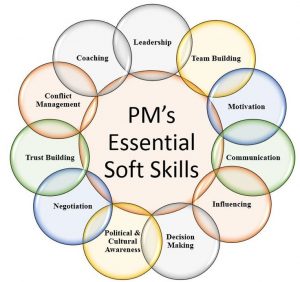
5. Leadership Skills—This category overlaps with some of the others and focuses on the “attitude” and “mindset” required for project management. However, it also includes key skills such as interpersonal and general people skills, adaptability, flexibility, people management, degree of customer orientation, analytical skills, problem-solving skills, and the ability to keep the “big picture” in mind.

The specific combination of skills that are required for a project manager to be successful on a given project vary depending on the size and nature of the project. For example, as a general rule, on larger projects, technical knowledge is less important than competence in the other four skill categories.

One doesn't have to be outstanding in all the above mentioned categories to be successful as a project manager. The key is that the project manager has the right mix of skills to meet the needs of the given project. In addition, a self-assessment against these skill categories enables you to leverage your strengths, compensate for your deficiencies, and focus your self-improvement program.

Having the desired skill set is not only sufficient to be successful as a project manager and certain qualities are also required. These we'll discuss in the next post.

Tuesday, 23 July 2019

The Project Manager - One Title, Many Roles

A few common analogies to describe the role of project manager—the “captain” of the ship, the “conductor” of the orchestra, the “coach” of the team, the “catalyst” of the engine, and so on. There’s truth and insight in each of the analogies, but each can be incomplete as well. 

To gain better understanding of what a project manager does, let’s briefly discuss each of the key roles played by the project manager:


Planner—Ensures that the project is defined properly and completely for success, all stakeholders are engaged, work effort approach is determined, required resources are available when needed, and processes are in place to properly execute and control the project.

Organizer—Using work breakdown, estimating, and scheduling techniques, determines the complete work effort for the project, the proper sequence of the work activities, when the work will be accomplished, who will do the work, and how much the work will cost.

Point Man—Serves as the central point-of-contact for all oral and written project communications.

Quartermaster—Ensures the project has the resources, materials, and facilities its needs when it  needs it.

Facilitator—Ensures that stakeholders and team members who come from different perspectives understand each other and work together to accomplish the project goals.

Persuader—Gains agreement from the stakeholders on project definition, success criteria, and approach; manages stakeholder expectations throughout the project while managing the competing demands of time, cost, and quality; and gains agreement on resource decisions and issue resolution action steps.

Problem Solver—Utilizes root-cause analysis process experience, prior project experiences, and technical knowledge to resolve unforeseen technical issues and to take any necessary corrective actions.

Umbrella—Works to shield the project team from the politics and “noise” surrounding the project, so they can stay focused and productive.

Coach—Determines and communicates the role each team member plays and the importance of that role to the project success, finds ways to motivate each team member, looks for ways to improve the skills of each team member, and provides constructive and timely feedback on individual performances.

Bulldog—Performs the follow-up to ensure that commitments are maintained, issues are resolved, and action items are completed.

Librarian—Manages all information, communications, and documentation involved in the project.

Insurance Agent—Continuously works to identify risks and to develop responses to those risk events in advance.

Police Officer—Consistently measures progress against the plan, develops corrective actions, reviews quality of both project processes and project deliverables.

Salesman—An extension of the Persuader and Coach roles, but this role is focused on “selling” the benefits of the project to the organization, serving as a “change agent,” and inspiring team members to meet project goals and overcome project challenges.

There is consensus that the disciplines and techniques used in project management can be applied in any industry, there is no consensus on whether individual project managers can be effective in a different industry.

There is no doubt that the more knowledge and experience that a project manager has in the subject matter area of the project, the more value that he/she can offer. However, depending on the size of the initiative and the team composition, a project manager with different industry experience can bring tremendous value if that person is strong in the skill categories discussed in the next post.